
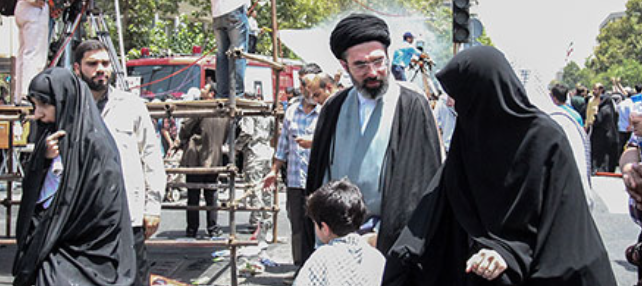
In March 2026, the Islamic Republic of Iran entered a new chapter in its history. Following the assassination of Ayatollah Ali Khamenei during the 2026 Iran conflict, the Assembly of Experts elected his son Mojtaba Khamenei as the country's third Supreme Leader — making Iran's leadership the second time in the Islamic Republic's history that a father's mantle had passed to a son in spirit, though the first time quite so directly through family lineage.
The Khamenei family is one of the most consequential political and religious dynasties in the contemporary world — a family of clerics, scholars, and administrators whose influence has shaped Iran for nearly half a century. This is the story of that family: its roots in the holy city of Mashhad, its rise through revolution, and the dynasty that now leads the Islamic Republic into an uncertain future.
The Family's Deep Roots: Ancestry and Origins
The Khamenei family is of Iranian Azerbaijani and Persian origin. The name "Khamenei" derives from Khamaneh, a small town in East Azerbaijan province, where the family's Azerbaijani roots originate. Wikipedia — Khamenei family
The family claims descent from Husayn ibn Ali, the son of Ali, the first Shia Imam, and the maternal grandson of the Prophet Muhammad — a lineage that grants the family the honoured title of Sayyid (a descendant of the Prophet's family). This claim of Sayyid descent is a profound source of religious legitimacy in Shia Islam, and the family's middle name "Hosseini" reflects this lineage directly. Some of the family's ancestors are from Tafresh in today's Markazi Province, and the family migrated from Tafresh to Khamaneh near Tabriz centuries ago. Wikipedia — Mojtaba Khamenei
The Grandfather: Javad Khamenei — The Scholarly Foundation
The Khamenei dynasty's modern chapter begins with Seyyed Javad Khamenei — Ali Khamenei's father and Mojtaba's paternal grandfather — a respected Twelver Shia cleric and scholar based in Mashhad.
Javad Khamenei was an ethnic Azerbaijani Turk from Khamaneh, and his wife — Ali's mother — was Khadijeh Mirdamadi, an ethnic Persian from Yazd, daughter of Hashem Mirdamadi. Ali Khamenei described his childhood in Mashhad as marked by considerable poverty: the family lived in a modest neighbourhood, his mother made clothes from his father's old garments, and they at times relied on small amounts of raisins or milk purchased with money given by relatives. Wikipedia — Ali Khamenei
It was from this humble scholarly household — rich in religious learning but modest in material comfort — that one of the most powerful political figures of the 20th century would emerge.
Ali Khamenei — The Father, the Revolutionary, the Supreme Leader
Ali Hosseini Khamenei (19 April 1939 – 28 February 2026) was the second Supreme Leader of Iran, serving from 1989 until his assassination — a tenure of 36 years and six months that made him the longest-serving head of state in West Asia at the time of his death. Wikipedia — Ali Khamenei
Born in Mashhad as the second of eight children, Ali was a deeply intellectual young man from his earliest years. He began studying the Quran at the age of four, studied at the seminary (hawza) of Mashhad, and later settled in Qom in 1958 where he attended the classes of Ayatollah Ruhollah Khomeini — the man who would go on to lead the Islamic Revolution. Wikipedia — Ali Khamenei
As an adolescent, Ali read widely in literature, poetry, and novels, and began composing poetry himself. He was remembered for a striking ability to recall texts and an aptitude for literary criticism — qualities that would serve him in his later role as one of Iran's supreme religious authorities. He once reportedly jumped from a moving train to perform his prayers on time — a detail that speaks to his absolute commitment to religious observance even in unusual circumstances.
He was arrested six times by the Pahlavi (Shah's) government for his opposition activities before being exiled for three years. After the 1979 Islamic Revolution, he rose rapidly — serving as deputy defence minister and then as President of Iran from 1981 to 1989, before being appointed Supreme Leader following the death of Khomeini. Wikipedia — Ali Khamenei
Ali Khamenei was assassinated on 28 February 2026 during the 2026 Iran conflict.
Ali Khamenei's Wife: Mansoureh Khojasteh Bagherzadeh — The Private Matriarch
Mansoureh Khojasteh Bagherzadeh (born 14 March 1947, Mashhad) is the wife of Ali Khamenei and the mother of Mojtaba. She comes from a religious and mercantile family in Mashhad — her father, Mohammad Esmaeil Khojasteh Bagherzadeh, was a respected businessman in the city, and her brother Hassan Khojasteh Bagherzadeh went on to hold a prominent position as deputy director of IRIB (Islamic Republic of Iran Broadcasting). The City Celeb
Mansoureh and Ali first met in a private ceremony in 1964, and their marriage was officiated by Ayatollah Mohammad Hadi Milani. She married a young cleric of modest means; she could not have known she was marrying a man who would one day lead a nation. ZGR.net
Throughout Ali's years of imprisonment, underground activity, and revolution, Mansoureh was a steadfast partner. In a rare interview given in the early 1990s, she described her most important role as "maintaining a peaceful atmosphere at home." But she was far more than a homemaker: she distributed leaflets, carried messages, hid documents, and during the final months before the revolution, helped transmit telephone messages from Ayatollah Khomeini in Paris to distribution centres across Mashhad and Khorasan province. Wikipedia — Mansoureh Khojasteh Bagherzadeh
Despite decades as the spouse of Iran's Supreme Leader, she maintained an almost entirely private life — rarely photographed, rarely quoted, and never holding any formal public or political office.
Ali and Mansoureh's Six Children
Ali Khamenei and Mansoureh Khojasteh Bagherzadeh had six children together — four sons and two daughters — each of whom grew up in the household of one of the most powerful religious and political figures in the Islamic world. Wikipedia — Ali Khamenei
Mostafa Khamenei (born 1965) is the eldest son. He followed the clerical tradition of his father and grandfather, pursuing religious studies and marrying into another clerical family — the daughter of Ayatollah Aziz Khoshvaght. He has maintained a relatively low political profile compared to his younger brother.
Mojtaba Khamenei (born 8 September 1969) is the second son and the current Supreme Leader of Iran — his story is detailed in full below.
Masoud Khamenei (born 15 March 1972) is a cleric and scholar involved in managing and publishing his father's works. He too married into a clerical family.
Meysam Khamenei (born 1978) is the youngest son, who has kept a lower public profile.
Boshra Khamenei (1980–2026) was the younger of the two daughters. She was killed in the same airstrike that took her father's life in February 2026. Wikipedia — Mansoureh Khojasteh Bagherzadeh
Hoda Khamenei (1979–2026) was the elder daughter. She was married to Mesbah Bagheri Kani. Her husband was also killed in the airstrike that killed Ali Khamenei. Wikipedia — Khamenei family
Mojtaba Khamenei — Iran's Third Supreme Leader
Mojtaba Hosseini Khamenei was born on 8 September 1969 in Mashhad — the second child of Ali and Mansoureh, named "Mojtaba" after Navvab Safavi (born Mojtaba Mir-Lohi), a radical Shia cleric about whom his father had said "first kindled the fire of revolutionary Islam in my heart." Wikipedia — Mojtaba Khamenei
His early childhood was spent partly in the northwestern Iranian cities of Sardasht and Mahabad, where he received his early education over seven years. He later graduated from the elite Alavi High School in Tehran — an institution closely associated with Iran's revolutionary elite. Wikipedia — Mojtaba Khamenei
He speaks Persian natively, and is fluent in Arabic and English, and has completed specialised studies in psychology and psychoanalysis — an unusual academic combination for a senior cleric.
Military Service
In 1987, at the age of 17, Mojtaba joined the Islamic Revolutionary Guards Corps (IRGC), serving in the Habib bin Muzahir Battalion during the Iran–Iraq War alongside figures who would later become commanders of the IRGC — including Qassem Soleimani and Hossein Ta'eb. He participated in several operations of the Iran–Iraq War, including Operation Beit ol-Moqaddas 2, Operation Dawn 10 and Operation Mersad. Wikipedia — Mojtaba Khamenei
Clerical Career
In 1989, Mojtaba began his seminary studies in Qom, studying under senior theologians including Mohammad-Taqi Mesbah-Yazdi and Ayatollah Lotfollah Safi Golpaygani. He later joined the Qom Seminary as a theology teacher himself — from 2004 teaching advanced jurisprudence (Kharij-e Fiqh) courses for approximately two decades, courses considered among the most heavily attended in the seminary. Wikipedia — Mojtaba Khamenei
Political Role
Despite never holding a formally elected or publicly announced position, Mojtaba spent years operating as a highly influential figure within the Office of the Supreme Leader — controlling access to his father, coordinating political relationships, and maintaining influence over key institutions including the Basij paramilitary militia. From 2009 onwards, he was reported to have assumed effective leadership of the Basij — one of the five branches of the IRGC. NPR
In 2019, the US Treasury Department placed Mojtaba Khamenei under sanctions for acting in place of the Supreme Leader without election or formal appointment, and for working closely with the commander of the Quds Force. Wikipedia — Mojtaba Khamenei
Following his father's assassination in February 2026, and despite being injured himself in the same airstrike, Mojtaba was elected by the Assembly of Experts as Iran's third Supreme Leader in March 2026. Wikipedia — Mojtaba Khamenei
Mojtaba's Wife: Zahra Haddad-Adel (1979–2026)
Mojtaba Khamenei's marriage to Zahra Haddad-Adel was a union of profound political significance. Zahra was the daughter of Gholam-Ali Haddad-Adel — a prominent Iranian conservative politician, former Speaker of Iran's Parliament, and one of the closest members of Ali Khamenei's inner circle. The marriage firmly embedded Mojtaba within Iran's conservative political establishment through one of its most powerful families. NPR
Tragically, Zahra Haddad-Adel was killed during the airstrike that also claimed the life of her father-in-law, Ali Khamenei, on 28 February 2026 — just eight days before her husband was elected as Supreme Leader. Wikipedia — Mansoureh Khojasteh Bagherzadeh
Ali Khamenei's Siblings — The Wider Family
Ali Khamenei was one of eight children born to Javad and Khadijeh Khamenei. Several of his siblings have also played notable public roles.
Mohammad Khamenei (born 1935) is the eldest brother. Hadi Khamenei is a younger brother who became a newspaper editor and cleric — and notably a figure associated with reformist tendencies within the clerical establishment, placing him at a political distance from his brother's more hardline positions. Badri Khamenei is a sister who married Ali Tehrani (1926–2022). Badri's daughter Farideh Moradkhani (born 1971) became a notable activist — she was arrested in 2022 for speaking out against the Islamic Republic's treatment of protesters, a striking counterpoint to the family's dominant political alignment. Wikipedia — Khamenei family
The Khamenei Family Tree at a Glance
The Founding Generation
- Paternal grandfather: Seyyed Javad Khamenei — Twelver Shia cleric and scholar, Mashhad
- Paternal grandmother: Khadijeh Mirdamadi — Persian, from Yazd
- Ethnic roots: Azerbaijani Turk (paternal) and Persian (maternal); Sayyid lineage claiming descent from Husayn ibn Ali
Ali Khamenei's Generation
- Ali Hosseini Khamenei (19 April 1939 – 28 February 2026) — second Supreme Leader of Iran (1989–2026); President of Iran (1981–1989)
- Siblings: Mohammad Khamenei, Hadi Khamenei (reformist cleric), Badri Khamenei, and others
Mojtaba's Mother
- Mansoureh Khojasteh Bagherzadeh (born 14 March 1947, Mashhad) — daughter of businessman Mohammad Esmaeil Khojasteh Bagherzadeh; married Ali Khamenei in 1964/65; mother of six children
Ali and Mansoureh's Six Children
- Mostafa Khamenei (born 1965) — cleric; married daughter of Ayatollah Aziz Khoshvaght
- Mojtaba Khamenei (born 8 September 1969) — third Supreme Leader of Iran (2026–present)
- Masoud Khamenei (born 15 March 1972) — cleric; manages and publishes Ali Khamenei's works
- Meysam Khamenei (born 1978) — maintains private profile
- Hoda Khamenei (1979–2026) — married Mesbah Bagheri Kani; killed in 2026 airstrike
- Boshra Khamenei (1980–2026) — married son of Mohammad Mohammadi Golpayegani; killed in 2026 airstrike
Mojtaba Khamenei's Marriage
- Wife: Zahra Haddad-Adel (1979 – 28 February 2026) — daughter of Gholam-Ali Haddad-Adel (former Parliament Speaker); killed in same airstrike as her father-in-law, eight days before Mojtaba became Supreme Leader
Mojtaba's Father-in-Law
- Gholam-Ali Haddad-Adel — former Speaker of Iran's Parliament; prominent conservative politician; core member of Ali Khamenei's inner circle
The Weight of Dynasty
The Khamenei family's rise from the modest clerical household of Javad and Khadijeh in Mashhad to the supreme leadership of Iran across two generations is one of the defining stories of the Islamic Republic. It is a story of revolutionary conviction, political acumen, and the enduring power of family ties in one of the world's most consequential theocratic states.
For those interested in family history and genealogy, the Khamenei family tree offers a window into how religious lineage, scholarly tradition, strategic marriage alliances, and family loyalty have shaped the course of an entire nation's history.
The Sayyid ancestry that the family claims — tracing a line back through centuries to the Prophet Muhammad's family — connects modern Iranian politics to one of the oldest traditions in Islamic history. And the marriage between Mojtaba and Zahra Haddad-Adel — a strategic alliance between the Supreme Leader's son and the daughter of one of Iran's most powerful conservatives — shows how family networks continue to shape political power in the 21st century.
Every generation of the Khamenei family has defined its era. From Javad's scholarship in Mashhad to Ali's 36-year leadership of the Islamic Republic to Mojtaba's emergence from the shadows of his father's office — this is a family whose story is inseparable from the story of modern Iran.
Interested in tracing and preserving your own family's history across generations? The Family Root App makes it simple to build your family tree, document your ancestry, and share your heritage with the people who matter most.
👉 Start building your family legacy today with Family Root App
- Android: Family Root App on Google Play
- iOS: Family Root App on Apple Store
📜 Disclaimer The family tree and biographical information provided in this article are based on publicly available sources and records including Wikipedia, Britannica, and verified news reports. While we strive for accuracy, we do not guarantee the completeness or authenticity of all data. This content is intended for educational and informational purposes only. It does not represent any political endorsement or commentary on the policies of any government or individual. If you believe any information is incorrect or wish to request edits or removal, please contact us at Info@familyrootapp.com.